
Ever since I started researching wildlife watching I have wanted to go to Dryandra Woodland National Park. About 2 hours out of Perth and not far from Narrogin, it is a premier destination for nature lovers in WA. It is a patchwork of reserves in wheatbelt farming country, and thanks to DBCA’s Western Shield baiting program, wildlife has held on here where it has disappeared from most other places.
It is one of only a handful of places where our state fauna emblem, the Numbat (Myrmecobius fasciatus), can be seen in a naturally remaining wild population. The Numbat was once common across most of southern Australia from the west to the east coast – but disappeared as foxes spread westward following rabbits. As they are diurnal (active during the day), you need to drive the trails with your eyes peeled during their active hours – early morning and late afternoon are best.
Anyway, my mate Jimmy suggested we do a long late night to Dryandra the day before Australia Day. I was excited – my wife Mel and I had been there about 3.5 years earlier during the day (pre-kids!) and saw some great birds and an echidna, but I had never been at night.
Jimmy and I left at 6:30pm hoping to get there before the kangaroos got too active on the roads. The drive went well. We got to the reserve, set up our gear and drove very slowly spotlighting out the windows. Early finds were a pair of snoozing kookaburras, kangaroos and a few possums on the ground. Then we spotted this Tawny frogmouth.


Our main target of the evening was the Woylie – a small critically endangered marsupial that gets to about 40cm long and 1.5kg. Huge conservation efforts had led to the removal of its threatened status, which caused celebrations – but recent population crashes put it straight back to critically endangered. It’s not entirely known what caused the crash – possibly a parasite combined with cat predation – but it happened in multiple geographically separated locations simultaneously, which made it particularly baffling.
We headed down Wandering-Narrogin Rd before turning into the reserve on Kawana Rd, then right onto Gura Road to some old fenced sandalwood plantations – a couple of kms after the intersection of Koomal Rd. Woylies like to eat the sandalwood nuts and the fencing has gaps so they can come and go freely. Jimmy spotted a couple from the car at the first fenced region on the right. They were quite skittish and the dry leaves underfoot made quiet movement impossible. The photos below are all of the same Woylie – note the ear tags, it had clearly been caught before by researchers. It looks like it might have a joey in the pouch.


We then headed to the next plantation a little further up Gura Rd (also fenced, with parking on the left and an information board) to see if we could find some more. I tried to photograph one but it just wouldn’t stay still. Then I saw something mouse-like scurry up a dead tree and peer at me from the top. I thought Antechinus at first, but then it jumped to a nearby sheoak and I saw its tail – it was a red-tailed phascogale! It moved incredibly quickly and I couldn’t get a shot – I think the white light affected it. I hollered for Jimmy as it’s on his bucket list but he was too far away. I watched it for a minute or two moving furtively from branch to branch before losing it. This was only my second phascogale sighting – I had previously found a brush-tailed phascogale in Mundaring – so just the northern species left to see now. The phascogale was in the back right corner of the plantation in a section of mostly sheoak – I’ve been told that’s where they are most often found.

We saw a couple of possums sitting in a tree not far from where the car was parked.


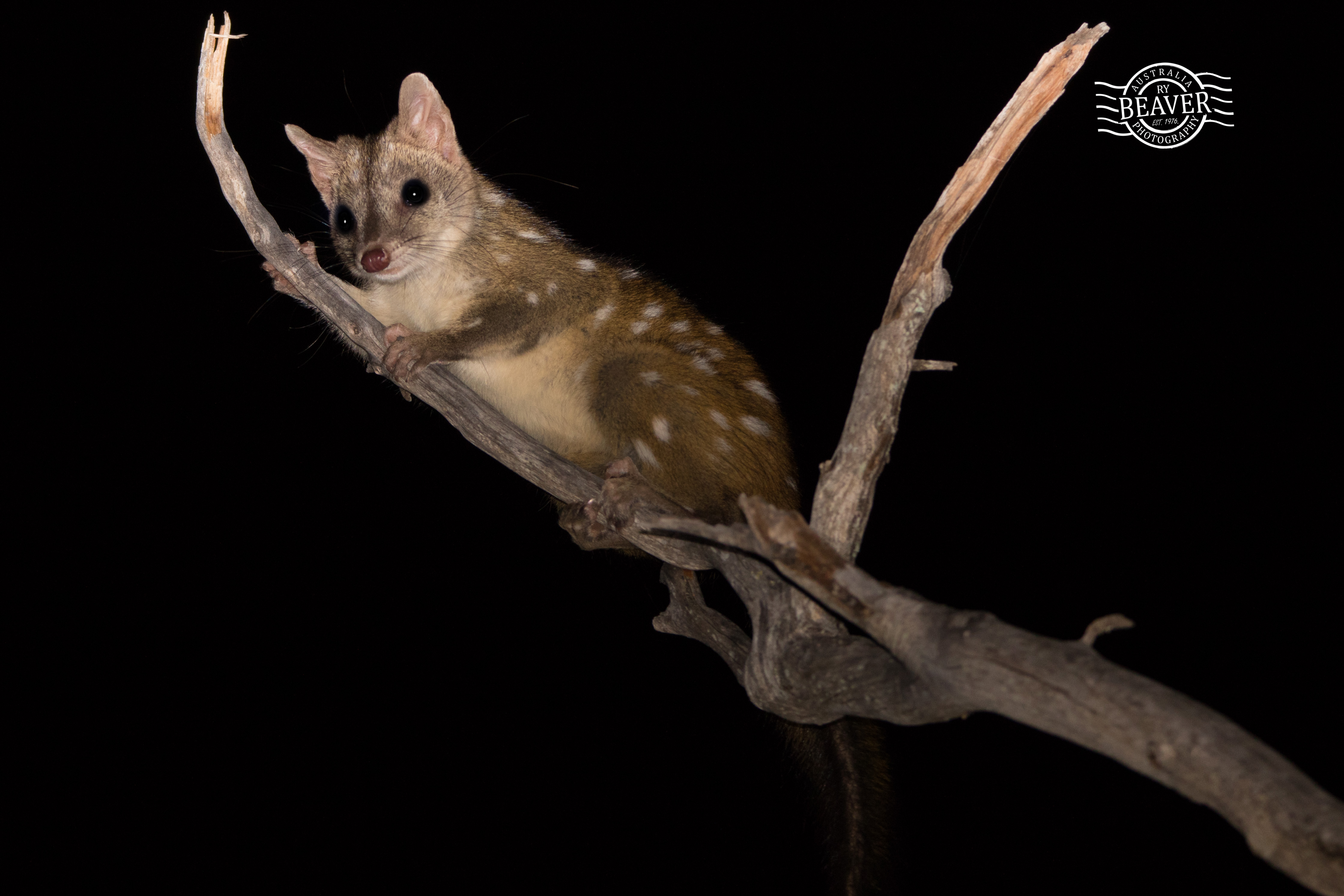
We then headed further up Gura Rd to a spot where Jimmy had heard Tammar wallabies had been seen but had never found them himself. Not far along, Jimmy saw something dash across the road that he wasn’t sure about at first. We stopped for a better look. It was a Chuditch – a bucket list animal for me. Chuditch is one of the Noongar names for the Western Quoll, also called a native marsupial cat. It is one of the larger carnivorous marsupials and something I had always been desperate to see. We jumped out of the car quickly and it shot straight up a tree – perfect, now we could get a good look.


It was a beautiful golden honey colour with white spots – on the ground it had seemed quite elongate and moved very quickly. In the tree it just watched us, not seeming fearful at all. Jimmy thought it might be a juvenile as it was smaller than others he had seen before. We watched it for a while before leaving it be. I was buzzing. I had previously tried Julimar Forest and Lane Poole Reserve hoping to see Chuditch, both without success.
We then headed to a grassy clearing where Jimmy thought Tammar wallabies might be – but no luck. It was getting close to midnight so time to head for home.
I should mention we had seen a couple of unidentified bats flying above us during the evening – one larger and one smaller. It was a warm night with plenty of insect activity. I also heard on a couple of occasions a White-striped freetail bat – one of the only Australian bats audible to the human ear without special equipment.
We re-checked the first Woylie spot on the way back – we had left a couple of peanut/oat balls hoping to attract more animals. They had been completely polished off by 2-3 possums. This juvenile was very cute.

I had mentioned to Jimmy it would be nice to see an echidna and sure enough we spotted one heading out of the woodland not long after.

Heading back on the Wandering-Narrogin Rd we saw a road-killed Tawny frogmouth that we moved off the road to prevent any scavengers suffering the same fate. We then saw 7-8 Western brush wallabies on the way home on Wandering-Narrogin Rd and Albany Hwy – but after all our luck for the evening it didn’t hold and I couldn’t get a shot. Each time we stopped they were on the wrong side of the car, or another car would appear and scare them into the bush.
Our final animal of the night was a Burton’s legless lizard crossing the road. We took some shots and then relocated it deep into the road verge.


We got back at about 2am. What a night.
Total mammal count – 8-10 species, with 2 new to me (marked *):
- Common brushtail possum
- Western grey kangaroo
- Woylie *
- Chuditch *
- 2-3 unidentified bat species (one White-striped freetail bat – heard only)
- Echidna
- House mouse (feral)
- Western brush wallaby
Dryandra is genuinely one of the best wildlife spotlighting destinations in Australia. If you want to know more about what’s possible there – including Numbats, Barna Mia, and how to plan a visit – see my dedicated Dryandra guide. And for a broader index of WA wildlife watching locations, the Where to See Wildlife in Western Australia page is the best starting point.
Like this photo? It’s available as a print
Chuditch, Woylie and other Dryandra wildlife prints are available to order – paper, canvas, metal, acrylic or framed, shipped anywhere in the world. Prints from US $2.
Further reading
- Numbat – where to find them in WA including Dryandra
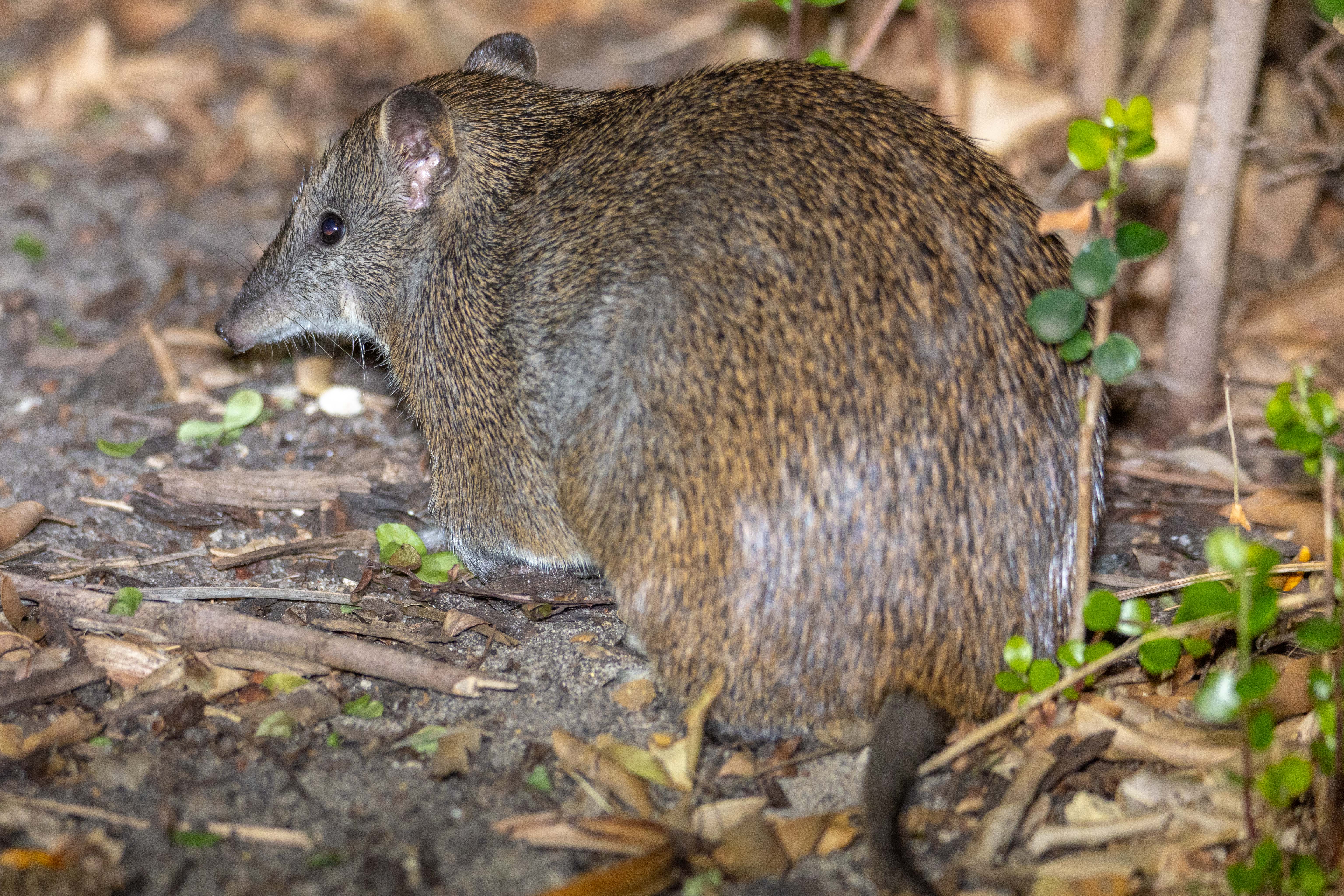
- Quenda – where to see them in WA
- Where to See Wildlife in Western Australia – full location index
You can also follow along on Facebook and Instagram for more regular updates between posts.


Leave a Reply