

I have been to Dryandra Woodland National Park a number of times now and it never disappoints. This trip was a little different – instead of a dedicated spotlighting mission with mates, we packed up the kids and headed out for a long weekend with our friend Russell and his boys Levi and Tobias. My son Liam and daughter Sienna came along, the wives stayed home and six people of us descended on Lions Dryandra Village for two nights. Our last Dryandra trip had been with the same family a year before – looking like becoming another annual tradition.
The forecast was looking wet – a few fronts moving through – but we ended up remarkably lucky, missing most of the rain while we were out and about. Temperatures ranged from 8°C on the first night down to a brisk winter’s day of 13-15°C by the end. The moon was just approaching full over the trip, which is worth noting – a bright moon can suppress wildlife activity as prey species become more cautious in the increased light. It didn’t stop us having an exceptional trip, but it’s something to bear in mind when planning a spotlighting visit: darker moon phases generally produce better results. I also had my passive bat recorder running next to the cottage on both nights and recorded no bat calls at all – whether that’s down to the moon, the cold and wet or simply the location I can’t say, but it was notable.
Night 1 – Echidna in the Thermal
We arrived on the evening of 26 June and got the kids settled into the cottage and got the fire going. Sienna spotted a possum making its way into the roof of the cabin – always a good sign that you are in the right place. Once the kids were in bed I headed out solo at around 9:30pm. The night was cold – 8 to 10°C – with a bit of wind.
The paddocks near the village were busy with Western Grey kangaroos as usual, and I found three possums in the trees. A honeyeater was roosting in a tree, puffed up against the cold – the thermal is great for finding sleeping birds by their heat signature. For more information about the thermal see previous post.
The highlight of the night came when I picked up a slow-moving blob in the distance on the thermal. Echidnas have a distinctive signature – they move slowly and deliberately and they are a little cooler than other mammals. I crept closer and confirmed it was indeed a Short-beaked echidna (Tachyglossus aculeatus) feeding in the ground, rooting around for termites. I got some photos and thermal video before leaving it to its night’s foraging. I also spotted a couple of Common brushtail possums (Trichosurus vulpecula). No woylies or other dasyurids on this first night, but a solid start.

Other images from the night below.


Day 2 – A Dufous Treecreeper, a Mardo and the Tammars Nobody Expected
Day 2 was a full day and it definitely delivered. We started with an amazing cooked brekky and then headed out on a morning drive from around 10am to 1pm, heading from the village out along Marri Road and some unnamed tracks. The birds were active and the kids were keeping their eyes peeled. We had good views of Rufous Treecreepers (Climacteris rufa) – the kids dubbed them “Dufous Treecreepers” because their habit of running along branches and appearing from behind a log for a split second makes you do a double-take and think Numbat every time.

We stopped for morning tea and it was here that Russ spotted a Mardo (Yellow-footed antechinus, Antechinus flavipes) on a log – playing peek-a-boo with us – but it disappeared into the log before everyone could get eyes on it. I waited while everyone else went off, and my patience was rewarded with enough time to get video of it. These tiny carnivorous marsupials move extremely fast and are easy to mistake for a mouse, but the colouring and face shape give them away.


I had a number of technical problems with the video – its shot in 4k HEVC Canon Log2 – I need to work out how to colour grade as its washed out but first I need it it to be able to play on my PC! Lucky a friend was able to convert into a viewable format format for me.


The Mardo is small, mouse sized but distinctive traits are bi-lobed ears, white rings around eyes and short tail; all of which can be seen in the photos. They also move in a stuttering fashion which is captured by the video.
Continuing onto Gura Rd,, Russ spotted an echidna by the road and the kids piled out to take photos. This was Liam’s moment – he got a cracking shot that I think is the best echidna photo of the weekend. He was very pleased with himself, and rightly so.


The kids got a really good look when it dug in near a log.

I got a video of the Echidna feeding which I am really pleased with.
Further on we also spotted a bird of prey a long way off in an adjacent paddock to the woodland – I wasn’t able to ID straight away but now know its a Brown falcon (Falco berigora).

After returning to the cottage for lunch, Sienna and I went for a walk into the nearby bush, checking under logs and flipping rocks. We found fungi, birds including Dufous, I mean Rufous Treecreepers and Rosellas, and 49 Western Grey Kangaroos – Sienna was counting.


Sienna tried her hand at wildlife photography and got some good shots focussing on the joeys.


Some shots that I took 🙂


We enjoyed a lovely BBQ dinner – the cottages had a brand new barbie and then smores for dessert using the fire inside the cottage. It was another cold night out.
The kids spotted a possum on our front porch and when the attention was too much it climbed into its box.


The cottage caretaker had mentioned that boiled eggs left out can sometimes attract Chuditch (Dasyurus geoffroii) to the verandah, so Sienna very helpfully cooked one and put it out on the verandah. We didn’t get a Chuditch – but a possum was on top of our BBQ looking content and no egg. Everyone got good views and photos after it moved on top of the gas heater.

In the evening we had some rainbelts come through but they cleared enough to get out – the younger lads decided to stay home and Russ & Sienna headed with me. We drove to Gnaala mia campground and I was hopeful for Woylie or Chuditch. We drove a loop of the Site 1 in the dark and and saw something in the undergrowth from the car. Russ & Sienna saw what they thought was a Woylie but didn’t get a good look. I then saw a macropod which was larger than a Woylie and more wallaby sized, but it also dashed off into the undergrowth. We then nearly finished the loop and had a better sighting of the wallaby.
They were clearly wallabies, not Western Greys Kangaroo joeys, and bigger than Woylies – they were Tammar wallabies (Notamacropus eugenii). I have seen Tammars at Garden Island and at Tutanning, but I had never seen them at Dryandra. They are present in the reserve but genuinely rare to encounter. A great find.

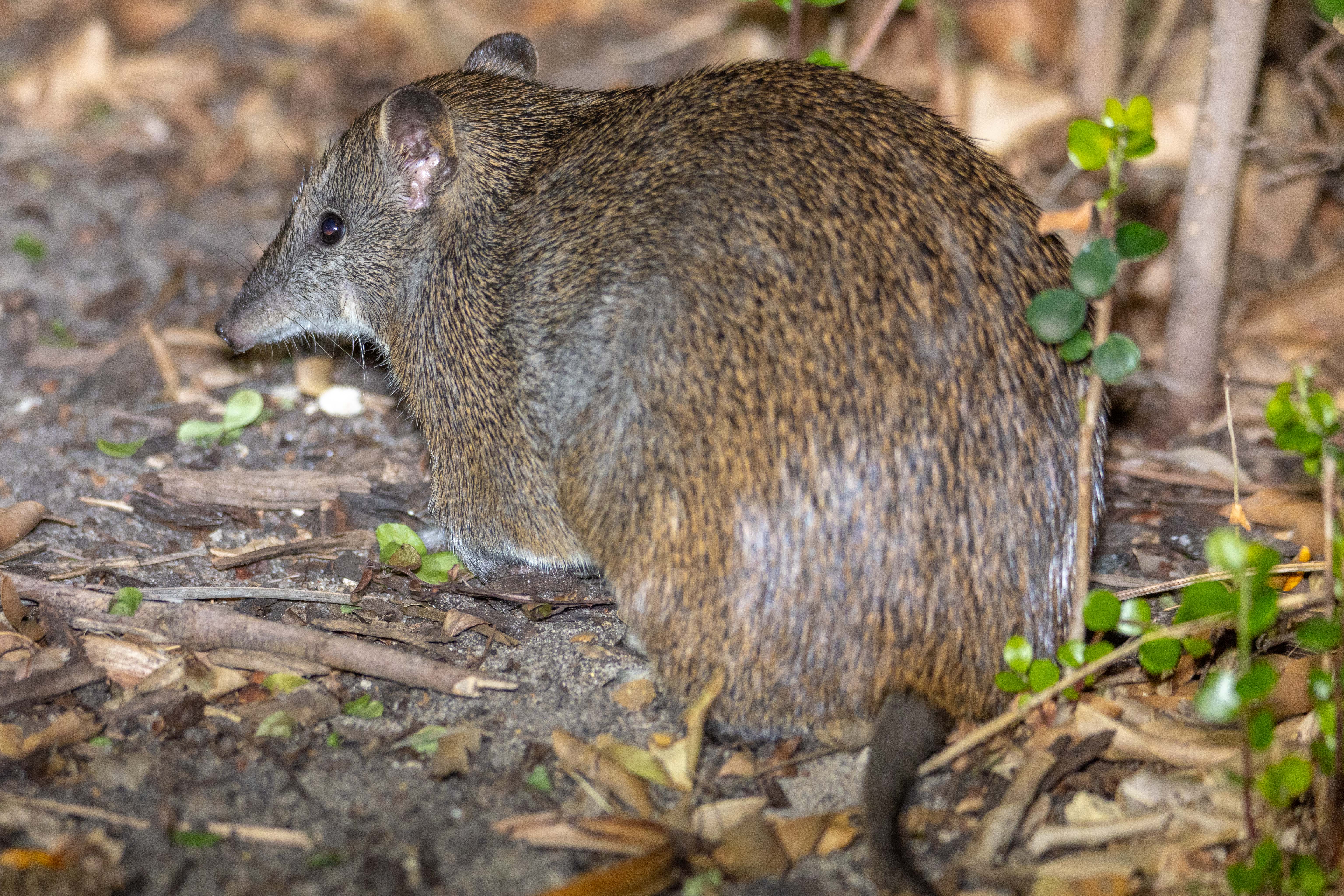
Driving along Marri Rd we saw another 4-5 possums and plenty more kangaroos. A Woylie (Bettongia penicillata), much smaller than the Tammars we had just seen, dashed across the road in front of the car on Tomingley Rd just before we got to the cottage – must have been only centimetres from the wheels. So scary when you almost kill a critically endangered animal! Russ & I got a fleeting look but it dashed into the dark woodland. No luck with the Chuditch despite our best egg-based efforts.
Day 3 – The Numbat Mum with Her Babies
The last morning was overcast – 13-15°C. We packed up the house, let the kids run off some energy at the playground, and then headed out for a last look around before the drive home.
We visited the old mill dam area where the kangaroos were out in force as always, then headed onto the Wandoo Walk – a lovely trail through wandoo woodland with a blue wren logo. The kids were taking photos of the kangaroos and then Tobias spotted a grey movement near a cracked log.
Liam called it first: Numbat.
We all crept over and what unfolded was one of those wildlife moments that reminds you why you do this. A female Numbat (Myrmecobius fasciatus) – WA’s state faunal emblem, Endangered with possibly 2,000 individuals remaining – was sitting in a cracked log watching us. We didn’t notice straight away but when she sat on her hind legs, she had babies clinging to her.


Numbats are unusual in that they don’t have a pouch. The tiny young – sometimes called “numbubs” in our household – simply cling to the mother’s underside, clinging to her nipples and hanging on as she goes about her day. By July they will be large enough to be left in a den while she forages, but at this point in late June they go absolutely everywhere she goes. She was entirely unbothered by us and sat there for 10-15 minutes while everyone got photos and just watched. The kids were transfixed.


One of the genuinely hard things about wildlife watching with kids – especially kids who are developing their own photography skills – is balancing the urge to get the shot yourself against giving them space to try. This numbat was so relaxed and stayed so long that for once there was no tension at all. Liam and Sienna both got great images, and I got mine too. Tobias had already spotted her, which made it feel like a proper team effort.


Some other great news on the Numbat – it’s conservation status has been changed in July 2026 from Endangered to Near Threatened after a 10 year review by International Union for Conservation of Nature’s (IUCN) Red List of Threatened Species™, estimating the population is now 2000-3000 mature individuals. The downlisting highlights the amazing work done by a number of government and conservation organisations and still requires ongoing work for their protection.
We had a picnic at the Old Mill Dam and then headed for home. On Tomingley Road just before the T-junction at York/Williams Road, a Numbat dashed across in front of the car but giving us time to slow and let it cross safely. That brought our total for the trip to five individual Numbats – mum with babies at the Wandoo Walk, and one more crossing the road. By any measure, an exceptional Dryandra visit. We drove home through rain and saw nothing further, but nobody in the car was complaining. What an exceptional weekend of nature, wildlife and time with friends & family.
Below shows the paths travelled and where a number of images were taken.


For additional sighting see my iNaturalist observations.
Species List
- Short-beaked echidna (Tachyglossus aculeatus) – multiple sightings including thermal video
- Numbat (Myrmecobius fasciatus) – 2 individuals including mum with 3 joeys clinging (do you count it as 5?)
- Woylie / Brush-tailed bettong (Bettongia penicillata) – 1 sighting, roadside flyby only
- Mardo / Yellow-footed antechinus (Antechinus flavipes) – seen on log, video obtained
- Tammar wallaby (Notamacropus eugenii) – 3 individuals at Gnaala Mia, rare at Dryandra
- Western Grey Kangaroo (Macropus fuliginosus) – abundant throughout
- Common brushtail possum (Trichosurus vulpecula) – multiple sightings including verandah encounter
- Rufous Treecreeper (Climacteris rufa) – too many 🙂
- Western Rosella (Platycercus icterotis)
- 28 Parrot / Australian Ringneck (Barnardius zonarius semitorquatus)
- Honeyeater sp. (roosting, thermal only)
- Scarlet Robin (Petroica boodang) – brief view, no photo
Dryandra Woodland FAQ
Can you see Numbats at Dryandra Woodland?
Yes – Dryandra Woodland is one of the most reliable places in the world to see wild Numbats. They are diurnal (active during the day) so no spotlight is needed. The best approach is to drive or walk slowly through wandoo woodland in the morning and watch for movement on logs and along the ground. Fallen logs and small diggings – can be good indicators of Numbat habitat. Winter mornings when the sun is warming up are particularly productive.
When is the best time to visit Dryandra for wildlife?
Year-round, but winter (June-August) is excellent for Numbats and nocturnal mammals. The cooler temperatures make spotlighting more comfortable and animals are often active earlier in the evening but rain might spoil things. Moon phase matters for nocturnal spotlighting – aim for new moon to first quarter for the darkest skies. Numbats can be seen any time of year during daylight hours.
Do Numbats have pouches?
No – Numbats are one of the few marsupials without a pouch. Tiny young are born and cling to the mother’s nipples on her underside, held in place by fur. In late autumn and early winter the young are still small enough to be carried everywhere the mother goes. By mid-winter they grow too large for this and are left in a burrow or den while she forages, then emerge as juveniles in spring.
What other wildlife can you see at Dryandra?
Dryandra is exceptional for mammals. Woylies (Brush-tailed bettongs), Echidnas, Mardo (Yellow-footed antechinus) and brushtail possums are all regularly seen. Chuditch (Western Quoll) are present but harder to find. Tammar wallabies occur in small numbers. Western Grey Kangaroos are abundant. Birds include Rufous Treecreeper, Western Rosella, 28 Parrots, Scarlet Robin and many others. For a full guide to what to look for and where, see the Dryandra spotlighting post.
Is Dryandra good for wildlife watching with kids?
It’s one of the best places in WA for wildlife watching with children. Numbats are viewable in daylight without any specialist equipment, kangaroos are plentiful, and the cottage accommodation at Dryandra Village makes it comfortable for families or camp at Gnaala mia. Kids who are starting to get into photography will find patient, close subjects with the kangaroos. The Wandoo Walk is a manageable trail for younger legs. Night walks with a spotlight add excitement for older kids.

Like this photo? Prints are available
Numbat and echidna prints from this trip are available to order — paper, canvas, metal, acrylic or framed, shipped anywhere in the world. Prints from US $2.
Further Reading
- Numbat — Where to Find Them in Western Australia — full location guide including Dryandra, Boyagin and Perup
- Dryandra Spotlighting — Mammal Heaven — my most productive night including Chuditch and Red-tailed phascogale
- Mardo at Dryandra — a dedicated post on finding Yellow-footed antechinus
- Dasyurids — hub page covering all WA’s carnivorous marsupials
- Where to See Wildlife in Western Australia — full location index
You can also follow along on Facebook and Instagram for more regular updates between posts.
Leave a Reply