
In January 2023, Mel, the kids and I flew from Perth to Hobart for two weeks in Tasmania. Liam was 8 and Sienna was 6. We had a target list of wombats, devils and platypus, plus plenty of family sightseeing, and we were open to whatever else turned up. What we didn’t expect was one of the most amazing wildlife experiences of my life.


Tasmania has been on my list for years. As a wildlife watcher based in Perth, I spend a lot of time searching for WA’s unique fauna – but Tasmania is a different world entirely. It’s the last stronghold for animals that have been lost from the Australian mainland: Tasmanian devils, spotted-tailed quolls, eastern quolls, Tasmanian bettongs, long-nosed potoroos. Animals that were once widespread across the continent, now only in this island refuge. I’d done my research. I had my target list. I was excited. We had also discussed that we might just find the extinct Tasmanian tiger as well!
The kids were… cautiously interested. Sienna was six, Liam was eight. At that age the promise of “animals at night” is exciting, but the reality of staying up late can be different. By the end of the trip they were both convinced.
Day 1: Arriving in Hobart — First Lifers Before Bed
We flew Perth to Hobart on the 3rd of January, arriving early evening. Collected the hire car, drove 20 minutes, checked into Discovery Park in East Derwent — a great base, cabin accommodation, easy for the family.
I couldn’t resist a walk around the campsite that first night. It was 10pm, 13 degrees, waxing gibbous moon — reasonable conditions. Within minutes I had my first two Tasmanian lifers!
Bennett’s wallabies (Notamacropus rufogriseus known as Red-necked wallaby on the mainland) were moving around the campsite margins — bigger and bulkier than the wallabies I know from WA, with that distinctive rusty neck patch. And pademelons — Tasmanian pademelons (Thylogale billardierii)— compact, dark, bouncing through the understorey with that characteristic hunched macropod posture. Neither are rare in Tasmania but for a Perth wildlife watcher they were completely new, and that first encounter with an animal you’ve never seen before in the wild carries its own particular charge regardless of how common it is.


I wrote in my notes: “Excited to see new things. Lifers!!” That double exclamation mark was earned.
Day 2: Over to Bruny Island

Bruny Island sits just off the D’Entrecasteaux Channel, a 20-minute ferry ride from the Kettering terminal about 35 minutes south of Hobart. It’s famous for its wildlife — particularly the Bruny Island population of Eastern quolls, which is one of the most accessible anywhere in Tasmania — and for the spectacular coastal scenery of South Bruny.

As a teaser to Bruny wildlife but also something we saw that wasnt so nice we saw this sign showing quolls!

We checked into our cottage (Hotel Bruny Explorer Cottages) in Lunawanna, South Bruny and spent the day exploring. Beautiful island. Great beaches. The kids were immediately at home.

But I was thinking about nightfall and what we might see! Coming to late afternoon we had both pademelons and wallabies in our back garden.


We had a family of Tasmanian native hens (Tribonyx mortierii) (nicknamed Turbo chickens which the kids loved).


Night 1 on Bruny: The Road Comes Alive
I want to be upfront about something before I describe the first Bruny night drive: Tasmanian roads at night require careful driving. The wildlife density on Bruny is extraordinary, and the roadkill toll is heartbreaking — we hit a brushtail possum gently on the first night (it seemed unharmed and bolted into the scrub, but it shook me) and saw multiple road-killed animals over the two nights. If you’re doing this, please go slowly. 20–30 km/h or slower on the smaller roads, scanning both sides constantly. The animals are worth the extra time.
That caveat made, what we saw was extraordinary.
We headed out at 9:30pm – 12 to 14 degrees, overcast, good mammal conditions. The main road along North Bruny was the primary route, spotlight out the window, everyone scanning. Within the first ten minutes we had Bennett’s wallabies. Then pademelons. Then more Bennett’s. Then –
Eastern quolls.

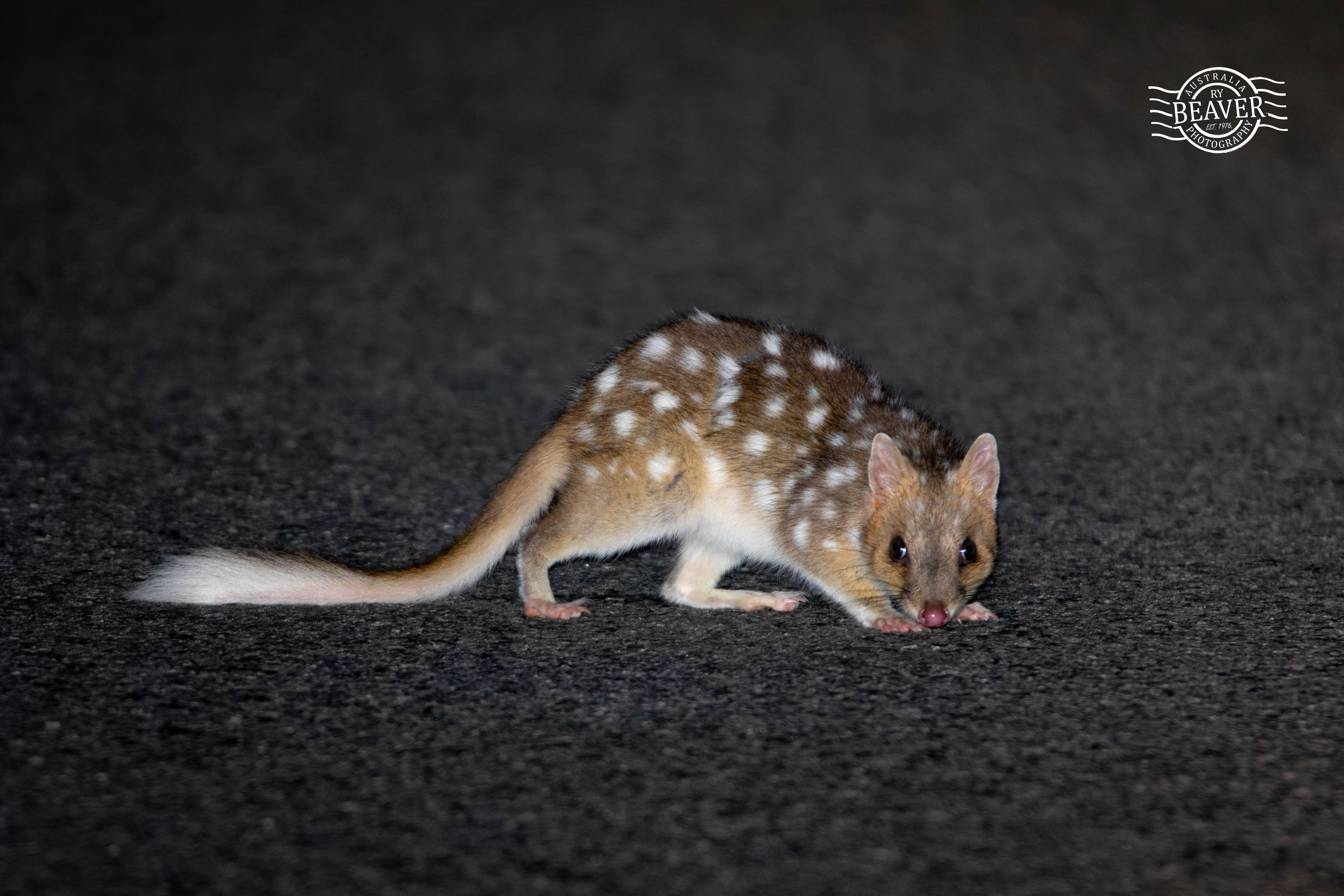
My first eastern quoll (Dasyurus viverrinus). I pulled over immediately, excited and feeling the need to get the camera settings right fast before it disappears. It didn’t disappear. It sat there, white-spotted and alert, and then went about its business.
This one boldly approached the car and we got a video!
Then there was another one. And another. And another.


By the end of that first night we had counted more than 20 eastern quolls. Twenty. On a single road on a single night. To put that in WA terms: I have seen perhaps three chuditch (western quoll) in my life across dozens of dedicated nights out. The Eastern quoll density on Bruny is something else entirely — a glimpse of what mainland Australia must once have looked like before foxes arrived.
The quolls came in two colour morphs: the more common dark brown/black spotted form, and a beautiful fawn/sandy morph that I hadn’t expected. Both were equally striking. We also saw two road-killed individuals — a reminder that the road itself is a significant threat to this population.

⚠️ Graphic content – roadkill image – click to expand

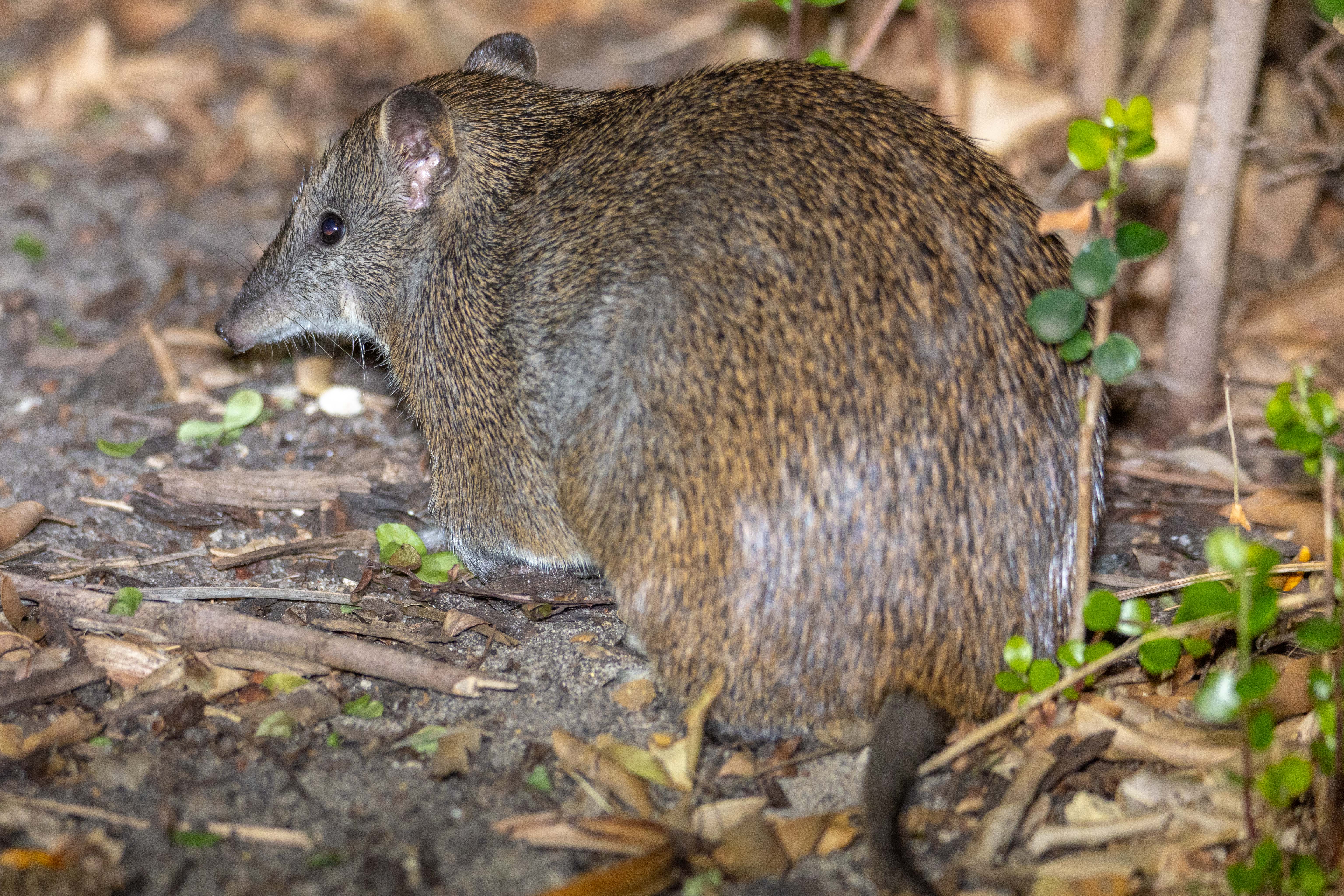
Alongside the quolls: a long-nosed potoroo (Potorous tridactylus) — resting on the North Bruny roadside, small and mouse-faced with that distinctive long snout. Another mainland extinction, thriving here and then a second later on. And lots of Bennett’s wallabies and pademelons along the road margins.

We spotted this unusual coloured Common brushtailed possum (Trichosurus vulpecula) – copper tones!

I went to bed that night genuinely dazed by what we’d seen. Lifers 3, 4, 5 and 6 in a single evening.
One of the things we loved on the island was fresh bread and baked goods being sold from an unattended old fridge on an honour system – yummo bread. We also saw an invasive bumble bee (Bombus terrestris) that I hadnt seen since trips to the UK. They have been established in Tasmania since the 1990s.


We went to explore Adventure Bay during the day and these photos show a good comparision between a Bennetts wallaby and Tasmanian pademelon. We also got a great wildlife tip from the locals at the general store – Adventure Bay, Hayes Road for white Bennett’s wallabies at dusk.


Night 2 on Bruny: White Wallabies and a Solo Run
The second night I went out alone — Mel had done the late night and deserved a break, and the kids needed to sleep. I headed out at 8:30pm, again along the North Bruny roads, but with my tip going to Adventure bay first.

Bruny Island has a significant proportion of white (albino) Bennett’s wallabies — a genetic quirk of the island off an island population that has persisted and spread because there are no foxes to make the white animals more visible to predators. On the mainland they’d be picked off quickly. Here they’ve survived and multiplied. Walking Hayes Road at dusk, I found a few in the paddocks along the road edge — luminous white against the darkening grass, completely improbable looking.


White wallaby grazing at dusk on Bruny Island — one of Tasmania’s more remarkable wildlife spectacles.
The quolls on night two were there but notably more skittish — perhaps 15 or so on North Bruny, one on South Bruny.


No potoroos this time. But I got a photo of a dark morph brushtail possum on the ground — Tasmanian brushtails are often much darker than the WA animals I’m used to, sometimes almost black, which is different.

The two Bruny nights gave me an extraordinary species haul: eastern quoll, long-nosed potoroo, Tasmanian pademelon, Bennett’s wallaby (including white morph), dark morph brushtail possum, and more. All lifers. All on island roads in just a few hours each night. I did see a feral European rabbit (Oryctolagus cuniculus).

What Makes Bruny So Special
Before I move on, it’s worth pausing to explain why Bruny Island has this extraordinary wildlife density. The answer is the same as for Garden Island back home: no foxes (that goes for the whole of Tasmania), no cats (or dramatically reduced predator pressure compared to the mainland). The island’s fauna has been allowed to exist at something approaching natural density.

The eastern quoll is a perfect illustration. Once widespread across southeastern Australia — Victoria, New South Wales, South Australia — it vanished from the mainland in the 1960s, almost certainly due to fox predation. Tasmania, which never had foxes, retained the population. Bruny Island has one of the densest and most accessible populations in the state. There are programs looking to reintroduce to the mainland but typically in a fenced enclosure.
When I drive a Bruny road at night and count 20 quolls, I think about what the Australian mainland must have looked like before European settlement. Then I think about what the WA mainland must have looked like. Then I feel the familiar mix of wonder and grief that wildlife watching in Australia tends to produce in anyone paying attention.
I also saw quite a lot of birds throughout Bruny – some native but also some invasive feral species as below.


Coming in Part 2: Hobart’s Waterworks Reserve delivers eastern barred bandicoots and possible Tasmanian bettongs on a solo night out, and Maria Island produces wombats — eventually — for the whole family.
Mammal species list for Part 1:
- Tasmanian pademelon — LIFER
- Eastern quoll (both colour morphs) — LIFER
- Long-nosed potoroo — LIFER
- Bennett’s wallaby (including white morph) — LIFER
- Common brushtail possum (dark morph)
- European rabbit (feral)
Tasmania Part 1 – Bruny Island FAQ
What’s the best way to see eastern quolls on Bruny Island?
Night driving along the North Bruny roads is the most reliable method – slowly, with a spotlight, scanning both verges. We saw over 20 in a single night. Adventure Bay and the roads around Hotel Bruny are also worth walking at dusk. Quolls are most active from dusk through to midnight.
Is it safe to drive at night on Bruny Island for wildlife spotting?
Only if you go slowly – 20-30 km/h on the smaller roads is essential. Wildlife density on Bruny is extraordinary, and so is the roadkill toll. Go slow, scan constantly, and accept that the drive will take far longer than the GPS suggests. The animals are worth the extra time.
How do you get to Bruny Island from Hobart?
A car ferry runs from Kettering, about 35 minutes south of Hobart, across the D’Entrecasteaux Channel. The crossing takes around 20 minutes. Bookings aren’t required for the vehicle ferry, though it’s worth checking current timetables before you go.
What’s the difference between the two eastern quoll colour morphs?
Eastern quolls come in a dark brown to black form and a fawn or sandy form, both with the same white spots. Both morphs turn up in the same populations – it’s a genuine colour polymorphism, not a subspecies difference. We saw both on Bruny within the same night.
Why are there white Bennett’s wallabies on Bruny Island?
They’re albino – a genetic condition that removes most pigment and leaves eyes and skin quite pink. On the mainland, white animals would be picked off quickly by foxes, but Bruny has no foxes, so the trait has persisted and spread through the population instead of being selected against.
You can also follow along on Facebook and Instagram for more regular updates between posts.

Leave a Reply