
This post is part of a collaboration trip with YouTuber Look Closer where our main focus was the Noolbenger or Honey possum (Tarsipes rostratus). That blog can be found here.
Most Western Australians and mammal watchers know how to find the endemic macropod the Quokka (Setonix brachyurus). Grab a ferry to Rottnest Island just off the coast of Perth, head to the bakery to buy a pie and whilst eating you are likely to be pestered by a Quokka for food – see a previous blog. Not so well known, is that they can also be found on the mainland where they tend to be quite cryptic and found in thick vegetation alongside rivers. The mainland distribution is found in patches from the Perth Hills all the way through to east of Albany, where the most south-eastern population can be found at Two Peoples Bay. I have looked for the hills populations before in Jarrahdale and Canning Dam with no success as yet.
Quokka conservation status is “Vulnerable” – whilst they are easily seen on Rottnest, on the mainland they are subject to many threats such as predation by feral cats and foxes, being hit by cars, fire and land clearing. If you want to find mainland Quokkas or other WA wildlife, my Where to See Wildlife in Western Australia guide covers locations across the state.
Also in this area can be found the critically endangered Gilbert’s Potoroo but they are rarely encountered and mostly found during formal survey work.
After finding Honey possum the night before, we travelled the 70km trip to Two Peoples Bay targetting mainland Quokka. We arrived there mid afternoon and enjoyed the picturesque beaches in this amazing part of the world.

I was pleased to see a couple of Sooty Oystercatchers a way off but the photos were good enough for ID purposes.

We enjoyed a barbeque meal in the parkland, explored the area and settled down to wait until dusk.

As it got dark we started to use the thermal and located a heat source a distance off in the bush surrounding the carpark.

This thermal footage shows how well warm blooded mammals stand out and how identification can be made from the size, overall shape and behaviour. At the end Look Closer can be seen getting his camera gear into place!
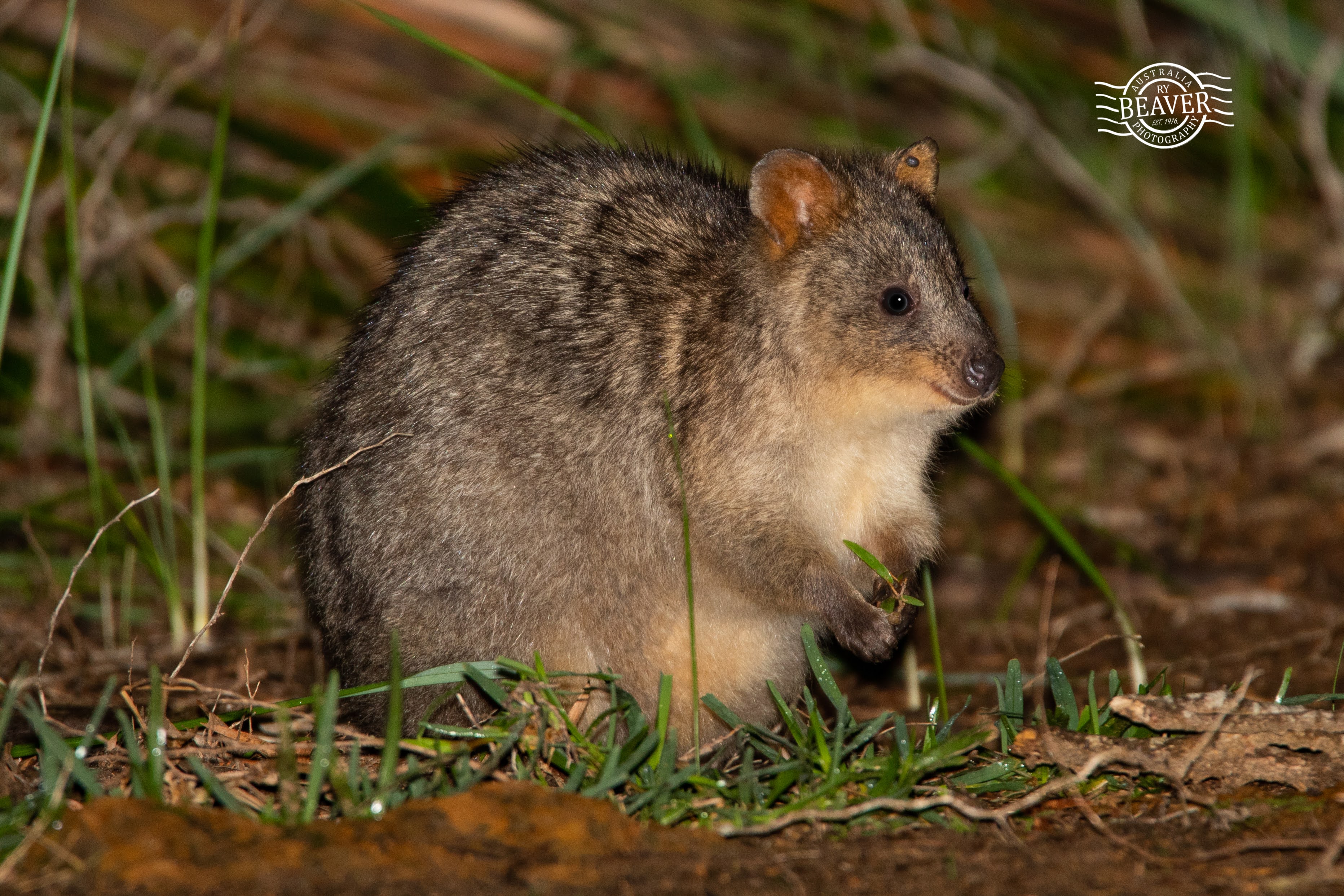
We crept closer and I was able to get this nice image of my first mainland Quokka with flash. Look Closer was also able to get great video footage.

The Quokka hung around just feeding from the lawns not bothered by us, but also not approaching us for food like a Rottnest Quokka would. That night we didn’t see any others but I was pleased to have had a successful evening. Little did we know that later that evening we were going to have an extended encounter with a Honey possum when we headed back to Cheynes Beach.
Look Closer created this awesome video of our visit and finding a Quokka.
Mainland Quokka FAQ
Can you see Quokkas at Two Peoples Bay?
Yes – Two Peoples Bay Nature Reserve is one of the most reliable spots to find mainland Quokkas in WA. They are present in the thick vegetation around the picnic and car park areas and can be found after dark with a spotlight or thermal camera. They are far more wary than the habituated Rottnest population and won’t approach for food, so patience and slow movement are key.
How do mainland Quokkas differ from Rottnest Quokkas?
Mainland Quokkas are the same species (Setonix brachyurus) but behave very differently. On Rottnest they are extremely habituated to humans and will actively approach for food. On the mainland they are cryptic, shy and mostly nocturnal – spending the day hidden in dense vegetation alongside watercourses and creeks. The difference is largely due to predator pressure on the mainland from foxes and feral cats, which keep the animals on high alert.
When is the best time to look for mainland Quokkas?
After dark is by far the best time. Mainland Quokkas are almost entirely nocturnal and emerge from dense cover to feed on grassy areas after sunset. A spotlight or thermal camera helps enormously – the thermal is particularly useful for detecting them before they detect you. Cooler months may also see them active slightly earlier in the evening.
What other wildlife can you see at Two Peoples Bay?
Two Peoples Bay is excellent for wildlife beyond Quokkas. The critically endangered Gilbert’s Potoroo (Potorous gilbertii) occurs here – one of the world’s rarest mammals – though it is rarely encountered outside formal survey work. The reserve is also great for birds, with Sooty Oystercatchers along the coast and a good diversity of bushland species. The nearby Cheynes Beach area is a great spot for Honey possums (Noolbenger).
How far is Two Peoples Bay from Albany and Perth?
Two Peoples Bay Nature Reserve is about 35km east of Albany, roughly a 30-minute drive. From Perth it’s approximately 420km, making it a long day trip or an easy overnight stop if you’re combining it with other south coast wildlife watching – the Cheynes Beach area with its Honey possums is only 70km away.

Like this photo? It’s available as a print
This mainland Quokka shot is available to order as a print – paper, canvas, metal, acrylic or framed, shipped anywhere in the world. Prints from US $2.
Further Reading
- Quokka – full species guide and where to find them
- Quokkas on Rottnest Island
- Honey possum at Cheynes Beach
- Where to See Wildlife in Western Australia – full location index
You can also follow along on Facebook and Instagram for more regular updates between posts.

Leave a Reply